
回家的诱惑
China forms a 220-member delegation for WorldSkills Shanghai 2026, entering all 64 events_我的网站

一 |
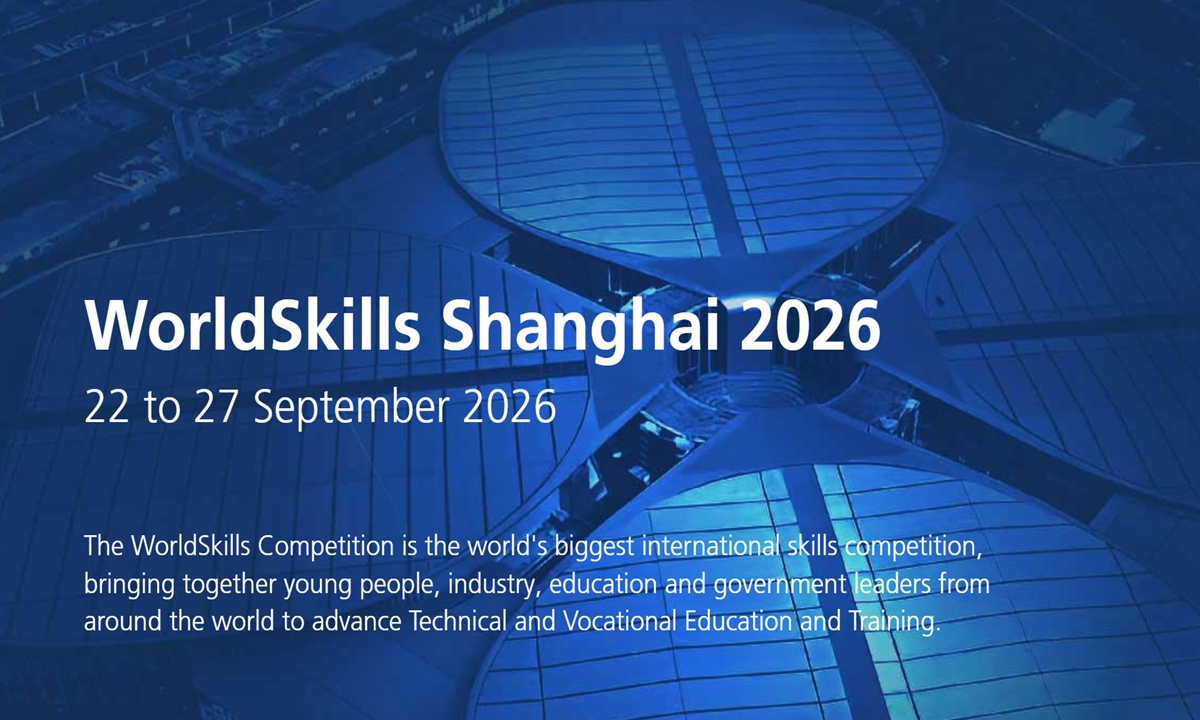
China has formally established a 220-member delegation for the 48th WorldSkills Competition to be held in Shanghai from September 22 to 27, with the approval of the Ministry of Human Resources and Social Security.
The delegation includes 71 competitors, 64 experts, and 64 interpreters and staff members. The competitors will take part in all 64 skill competitions at the event, the Science and Technology Daily reported.
The 71 competitors come from 21 provincial-level regions across China, including 49 students and 22 employees. Their average age is 21, with the youngest aged 18 and the oldest 25.
The WorldSkills Competition is the world's biggest international skills competition, bringing together young people, industry, education and government leaders from around the world to advance Technical and Vocational Education and Training, according to the WorldSkills Shanghai 2026 website.
About 1,400 competitors from nearly 70 countries and regions are expected to compete across 64 official skill competitions.
WorldSkills Conference 2026 and the WorldSkills Shanghai 2026 Expo will be held alongside the Competition, according to the event's official website.
Since joining WorldSkills International in October 2010, China has participated in seven editions of the WorldSkills Competition, winning 93 gold medals, 41 silver medals, 28 bronze medals and 71 Medallions for Excellence, according to Science and Technology Daily.
China has ranked first in both the gold medal table and overall team points for four consecutive editions. The Shanghai event will mark the country's eighth participation and the third time it has entered every skill competition.
"The delegation will strictly observe competition rules, compete fairly and with civility, demonstrate both sportsmanship and skill, and fully showcase the superb expertise and positive image of China's young skilled professionals in the new era," an official with the Chinese delegation was quoted as saying by Science and Technology Daily.
China's award ceremony uniforms and competition uniforms have also been unveiled. Both sets draw their central design elements from traditional Chinese mortise-and-tenon joinery, highlighting the inheritance of craftsmanship and the cultural confidence of China's young skilled professionals, according to the Xinhua News Agency.
Global Times
。
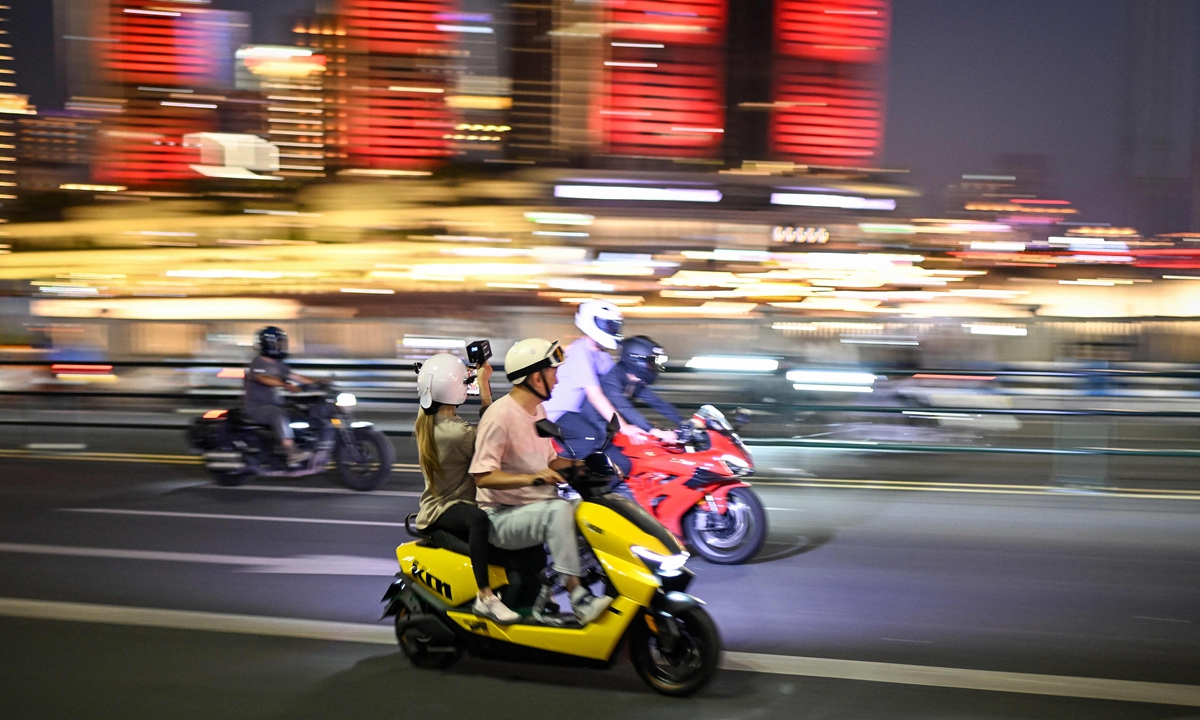
As night falls over Southwest China's Chongqing Municipality, motorcycles begin to weave along Nanbin Road, with riders posing against the glittering skyline across the Yangtze River. Within seconds, the moving camera captures bridges, high-rises and riverside lights - creating a signature travel moment that has become known online as the "Chongqing Landing Visa."
The trend has now spread beyond Chinese social media. On Monday, French rider Valentin Debise, who competes in the World Supersport Championship on a Chinese-brand ZXMOTO, posted a video thanking Zhang Xue for taking him to experience the "Chongqing Landing Visa."
The "Chongqing Landing Visa" is not an actual visa, but a humorous nickname coined by netizens for a popular motorcycle photo-op in Chongqing. Visitors ride or pose with motorcycles at designated spots along Nanbin Road, using Chongqing's dazzling nighttime skyline as a backdrop, while performing a series of signature poses, such as stretching out their arms, making a heart gesture or being lifted into the air, to capture their own video of the mountain city.
The motorcycle photo-op, a playful trend created by Chinese netizens, has rapidly gained popularity this year, with related videos garnering more than 1.52 billion views. An increasing number of celebrities, influencers and foreign tourists have joined in.
"People like the 'Landing Visa' not simply because motorcycles are cool, but because it combines some of the most distinctive elements of Chongqing into a single frame - the mountains, the river, the night skyline and the city's sense of speed," Chongqing-based motorcycle blogger Yu Tiancheng told the Global Times. "Visitors don't need to understand any complicated cultural background. They just get on a motorcycle, set off, and can start enjoying the city within seconds."
"For first-time visitors to Chongqing, motorcycles offer a very direct way in," Yu noted. "You're not just standing there looking at Chongqing. You're actually riding into its nighttime scenery."
The appeal of the "Chongqing Landing Visa" is not limited to professional riders or social media influencers. Young travelers from overseas are also discovering Chongqing through its everyday urban life.
A lively city
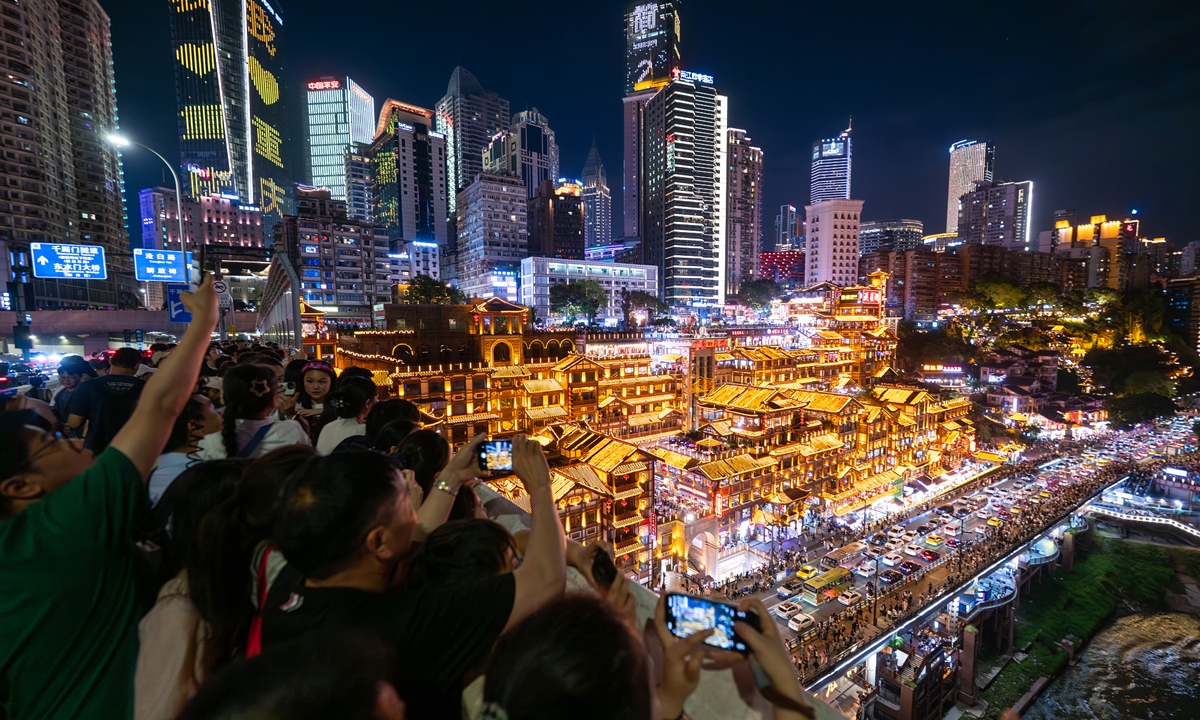
Kim Yeon, a graduate student from South Korea, visited Chongqing during her summer vacation in August. She told the Global Times that she had watched numerous "cyberpunk" videos of Chongqing on social media before her trip, but what surprised her most after arriving was the city's vibrant nightlife.
"Even late at night, there are still so many people on the streets, and restaurants, shops and small street-side businesses remain lively. For young travelers, that atmosphere itself is part of the travel experience," she said.
She was particularly struck by how Chongqing's nightlife is woven into everyday life rather than concentrated around a single tourist attraction. "You can have something to eat at night, walk around, go to the riverside to see the night view. A lot of activities can continue well into the night," she said.
This nighttime energy also provides a natural setting for the "Chongqing Landing Visa."
After spending the day exploring the city, visitors can continue discovering Chongqing after dark through motorcycle rides, nighttime tours and street-level experiences.
The motorcycle photo-op is therefore more than a photo opportunity; it has become part of the way young travelers experience the city at night.
That helps explain why Chongqing is attracting more young visitors from overseas. In the first half of this year, Chongqing Jiangbei International Airport handled more than 1.48 million inbound and outbound passengers at its immigration checkpoint, up 39.5 percent year-on-year, the fastest growth among China's 10 largest airports, according to Chongqing municipal people's government.
Nearly 70,000 foreign travelers entered Chongqing in July alone, up 84.7 percent year-on-year, according to Chongqing city government.
More than a destination
As more overseas visitors come to see Chongqing as a city they can enjoy and experience well into the night, motorcycles, night views and street life are becoming more than just backdrops - they are becoming experiences that travelers actively take part in.
Yang Gen, from the Chongqing Municipal Development and Reform Commission, told the Global Times that Chongqing's unique landscape and urban development have created a naturally three-dimensional cityscape. "Many places here are themselves scenes that people can experience and capture on camera," he said.
In his view, what makes the "Chongqing Landing Visa" interesting is that it was not a tourism project designed by the city in advance. Instead, visitors discovered a location and created a new way to experience it themselves.
"After people filmed and shared their experiences, more visitors were drawn to the same places, creating a natural chain of communication and influence," Yang said.
"This kind of approach, in which visitors participate in creating content and then attract more visitors through that content, is something traditional tourism promotion can hardly fully replicate," he noted.
Behind this new form of communication is also a shift in the travel preferences of younger tourists.
According to Yang, the ability to participate, experience and create personal memories is becoming an increasingly important factor when young travelers choose destinations.
The rise of the "Chongqing Landing Visa" also shows how locally created travel experiences can spread beyond borders through social media. As more international visitors share their China travel experiences online, China is attracting growing attention overseas.
Tesla CEO Elon Musk recently posted on X that "more people should visit China," while his mother Maye Musk has repeatedly shared her positive experiences of traveling in China.
The story of Chongqing offers a glimpse into this growing interest. The motorcycle trend is more than a viral moment; it shows how Chinese cities are attracting visitors not only through landmarks, but also through unique everyday experiences.
。
Current article:http://9nq5e9g.xuanliaruamibinmilangca.shop/news/20260826_961989.html
Published on:18:03:30


1
手机收到7.7级地震预警 官方致歉是偏差大了2
【观点】光大期货:供应端无收缩迹象,铁矿石延续窄幅震荡运行3
黑龙江省:助力初创企业找准定位、少走弯路、稳健成长4
神龟谢幕! 威少宣布退役 18载辉煌生涯画上句号5
意大利公司推出人工智能宠物碗:使用面部识别防止其他宠物偷窃6
江西宜春纪委回溯调查:3名公职人员酒驾牵出3场酒局_上高县_黄小云7
中国跳水队继续向“百金”进发8
记者:巴萨今夏难以引进B席,球员也没有将沙特视为优先选择9
华擎 13 款英特尔 Z790 主板曝光,部分支持 DDR4 内存_Riptide_型号10
处暑至,秋意始!今天福建人都干些啥?11
Smug Influencer's In-flight Smoking Video Creates Ruckus on Indian Social Media, Probe Launched12
全线隧洞掘进超万米 环北部湾广东水资源配置工程加快建设13
红河州福彩市场销售员技能提升培训圆满举行14
Here Are 18 Most Romantic Bollywood Dialogues to Celebrate Love This Valentine's Day15
省城闲置公车开到乡镇“上岗”,山东过好“车轮上”的紧日子
- 随机推荐
1
F1车手周冠宇:恢复好于预期 穿上赛车服再出发2
Dormabene马标寝具助力中国万水千帆赛安庆站圆满落幕!3
苹果 iPhone 18 Pro/Max 爆料汇总:A20 芯片、可变光圈等4
Anthropic:AI没有导致失业率的增加5
法案实施2年来,新西兰共有670人安乐死6
苹果诉OpenAI未点名Jony Ive7
[포토] 밝은 표정으로 나서는 김윤덕 장관-오세훈 시장8
SKhynix 淘宝旗舰店终止经营,已下架所有海力士存储产品9
深成指、创业板指均跌超1%10
早财经丨贵阳贵安今日全域开展核酸检测和抗原自查;一场脱口秀带火“600759”,公司回应;泽连斯基:乌军已控制东部和南部6000平方公里土地_月饼_地震11
信银、兴银跻身股份行理财公司“现金类”产品榜单前三!七日年化收益最高超3%丨机警理财日报(9月13日)_南财_净值12
长隆携手智元打造具身智能主题乐园13
全国游泳冠军赛:唐钱婷超女子100米蛙泳亚洲纪录14
PM Modi Japan Visit LIVE: टोक्यो पहुंचे पीएम मोदी का भव्य स्वागत, स्थानीय कलाकारों ने दी सांस्कृतिक प्रस्तुतियां15
一个月两次出手!京东再度驰援广西 无需汇报直接开仓救灾